
When the Screen Becomes a Support System: Technology, Young People, and the New Language of Resilience
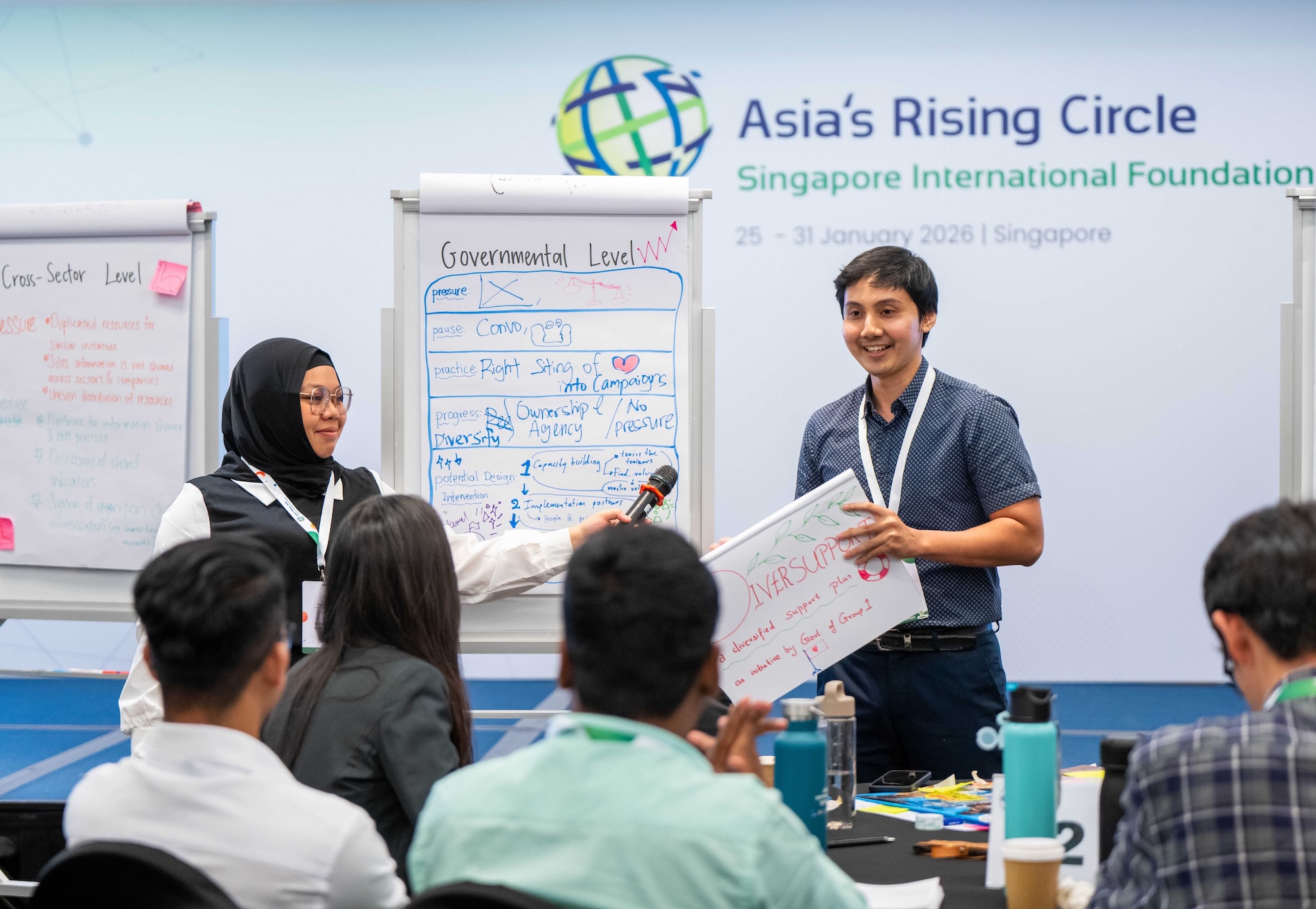
This article is authored by Asia’s Rising Circle alumnus, Mr Audrey Maximillian Herli, who is the co-founder of Riliv, a mental health technology platform in Indonesia.
We live in a time where young people turn to their screens first, instead of reaching out to another person when they feel overwhelmed.
While it is often viewed as a problem of being disconnected, I would argue it is a signal that reflects a broader shift in how young people seek connection, support, and reassurance in an increasingly digital world.
Earlier this year, I had the chance to join Asia’s Rising Circle (ARC), a regional programme by the Singapore International Foundation that brings together young changemakers from across ASEAN, China, and India. During the programme, we explored how well-being can shape economic opportunity and social mobility. One discussion that really stuck with me came from a panel discussion called, Digital Lifelines: Technology and Youth Well-being in Times of Change, where participants explored the growing relationship between technology, mental well-being and resilience in a rapidly evolving society.
One key takeaway from the panel was that technology is neither the hero nor the villain in the story of youth mental health. On one hand, digital spaces can intensify anxiety, comparison, and the pressure to constantly perform. On the other, they can also enhance access to communities, information, and support systems that many young people may not otherwise have.
The question is no longer about whether technology is good or bad for mental health, but how we can ensure that it works for young people, not against them.
Rethinking the “Distracted Generation”
I would like to debunk a stereotype that millennials and Gen Zs are somehow more emotionally vulnerable than our parents’ generation. In reality, young people today are more aware of their mental health than any generation before them, and tend reach out for help earlier. And more commonly, they are doing it through digital tools.
At Riliv, a mental health technology platform I co-founded in Indonesia, we have witnessed this shift first-hand. Many young people who access our online counselling and digital well-being services are not necessarily in crisis. Instead, they are proactively seeking support earlier, often at the first signs of emotional strain or uncertainty. In many cases, technology becomes the bridge that makes asking for help feel more accessible.
Technology as infrastructure, not just distraction
The discussions at ARC reinforced my belief that mental health technology is not about replacing human care, but about building a wider infrastructure of care. Across Southeast Asia, where access to mental health resources remains uneven, and stigma persists in many communities, technology can help lower barriers to entry, and expand access to support.
Resilience as a skill, not a personality trait
The ARC discussions also reinforced another key idea: resilience is not an inherent personality trait, but a skill that can be developed over time. As young people navigate increasingly complex futures shaped by technological disruption, economic uncertainty, and shifting workforce demands, resilience and adaptability will become even more critical.
As such, mental health and career readiness should not be two separate conversations. Young people who have learned to spot the signs of burnout before it hits, knows how to set boundaries, and practises regular self-reflection, is not just mentally healthier. They are more effective collaborators, more adaptable professionals, and more resilient human beings.
Equip, not just protect
Preparing young people for an uncertain future is therefore not only about protecting them from challenges, but equipping them with the tools to navigate complexity with confidence and awareness. Mental health technology, when designed thoughtfully and responsibly, can play an important role in supporting this process.
Being in the room with changemakers from across Asia at ARC reminded me that this work cannot be done alone. It takes collaboration between technology builders, educators, policymakers, and communities, across borders, sectors, and generations. Instead of asking whether young people should be using technology, we should start asking how we can make the technology they are already using work better for them.
That is the challenge; and perhaps the most important design problem of our generation.
Audrey Maximillian Herli is the co-founder of Riliv, a leading mental health technology platform in Indonesia. Under his leadership, Riliv has supported over a million users, and partnered with hundreds of companies and educational institutions across Southeast Asia. Audrey was named in the “Forbes 30 Under 30 Asia – Healthcare & Science 2020”. Connect with him on LinkedIn.
Find out more about ARC at: sif.org.sg/ARC