Reimagining Health Across Borders: What Two Young Leaders Learned About Care in ASEAN

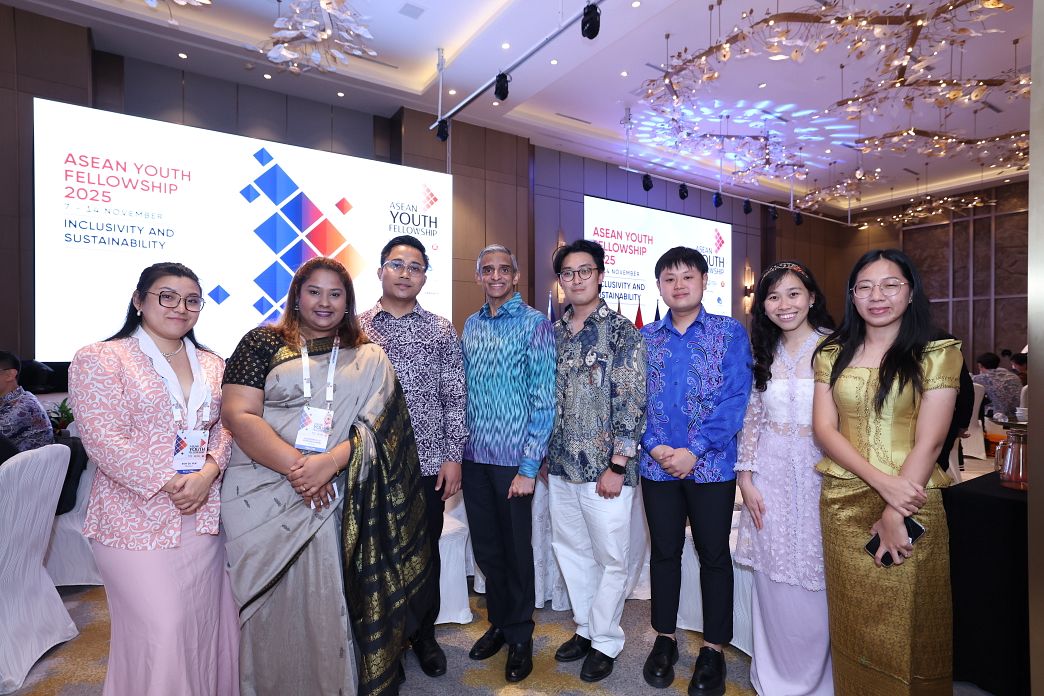
As the co-founder of Speedoc, Serene Cai leads a digital revolution in Singapore by bringing hospital-level care to patients into their homes. Meanwhile, in Malaysia, Su Yen Koh founded Emotion Pod to advocate for emotional regulation as a life skill and cerate safe spaces for vulnerability.
When asked about the start of their journeys, both shared pivotal moments that stayed with them long after. For Serene, the mission of ‘accessible healthcare’ became undeniable during the pandemic. She recalls young woman trapped in hotel quarantine who urgently needed a COVID-19 swab to be cleared to see her dying father.
“He only had hours left,” She reflects. “We got our people together, got her tested and she was able to see her father for the last time. It’s stories like that that really drive home how important our mission is.”
This experience reinforced Serene’s vision for a hospital-at-home company grounded in the belief that healthcare does not always need to be within hospital walls. By decentralising care, she wants to ensure that medical support can reach people wherever and whenever they are, especially when time is of the essence.
Su Yen’s voyage, on the other hand, came quietly but decisively. Just one week before her university graduation, she lost her mother; a loss that exposed a glaring gab in the world around her. She realised that while she was taught many things, the skills needed to process grief or regulate emotions are almost absent from modern education. “I found it very, very hard to process grief and I realised that emotion regulation is not taught in our education system,” she says, “The creation of Emotion Pod is very personal...I have this personal calling, and I want to pursue it.”
While their work took different forms, both responded to the same underlying question. How do we support people in moments when systems, norms, or structures fall short?
Seeing health beyond one place
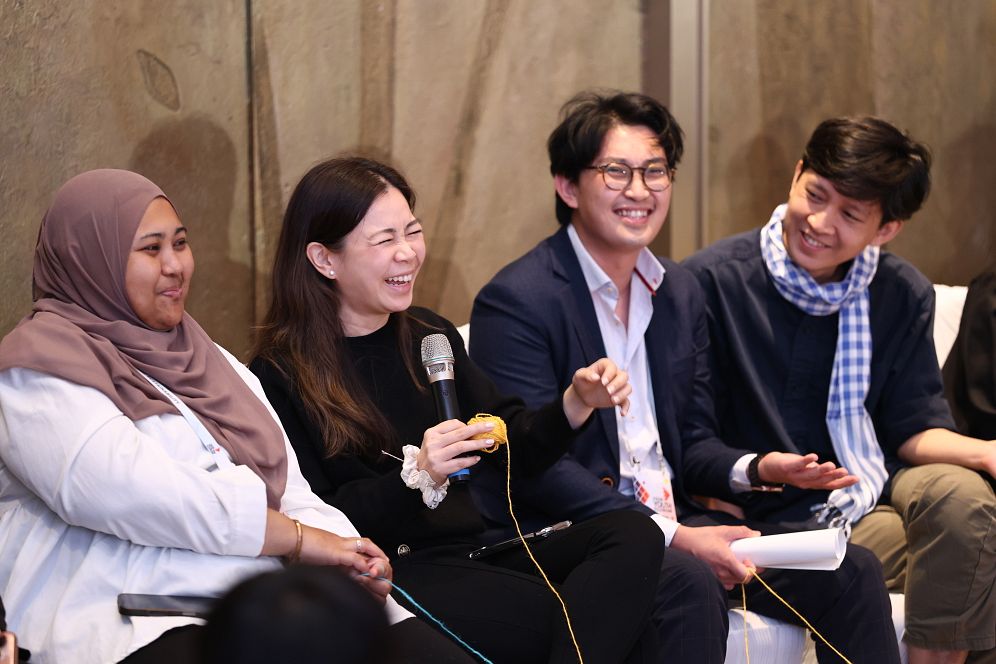
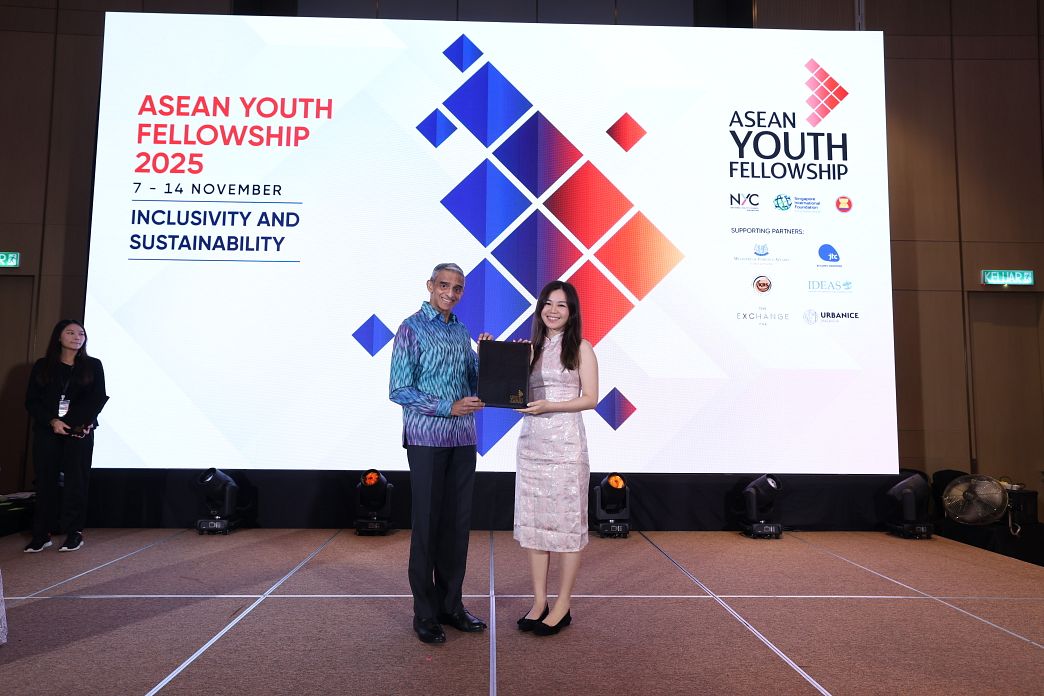
It was through meeting other inspiring youth during the annual ASEAN Youth Fellowship (AYF), co-organised by the Singapore International Foundation (SIF) and the National Youth Council (NYC) Singapore, that both Serene and Su Yen began to see their work differently through regional lens. More than just a leadership programme, AYF brings together youth leaders across ASEAN through a week-long immersive journey, it equips Fellows to lead regional collaboration, paving the way for a more equitable, innovative, and interconnected ASEAN.
For Serene, as a Singaporean participant, the value was in the diversity of voices.
“I gained many fresh insights from educators, civil servants, activists, and leaders from so many different kinds of industries,” she says reflecting on conversations with peers from across the region.
The conversations also revealed issues that extended far beyond Singapore. She noted the stark challenges facing children in underserved rural areas who have never met a doctor in their lives.
“It put my own problems in perspective,” she admits. This sparked a new urgency to collaborate, as she realised, “These are people that I’m looking to serve and hopefully we’ll be able to do something together.”
For Su Yen, a Malaysian Fellow, the regional lens surfaced in a different way. Cultural attitudes towards mental health, she observed, were often shaped by silence.
“Traditionally in Southeast Asia, there was the idea that mental health was shameful,” she reflects.
Rather than positioning mental health as something clinical or distant, she began thinking about everyday spaces where conversations could start naturally.
“I want people to normalise mental health conversations even in a mamak shop,” she said, referring to the casual open-air food establishments popular in Malaysia.
For both participants, learning from peers across ASEAN reframed health not as a national issue, but as a shared regional concern shaped by culture, geography, and access.
Leadership through listening and collaboration
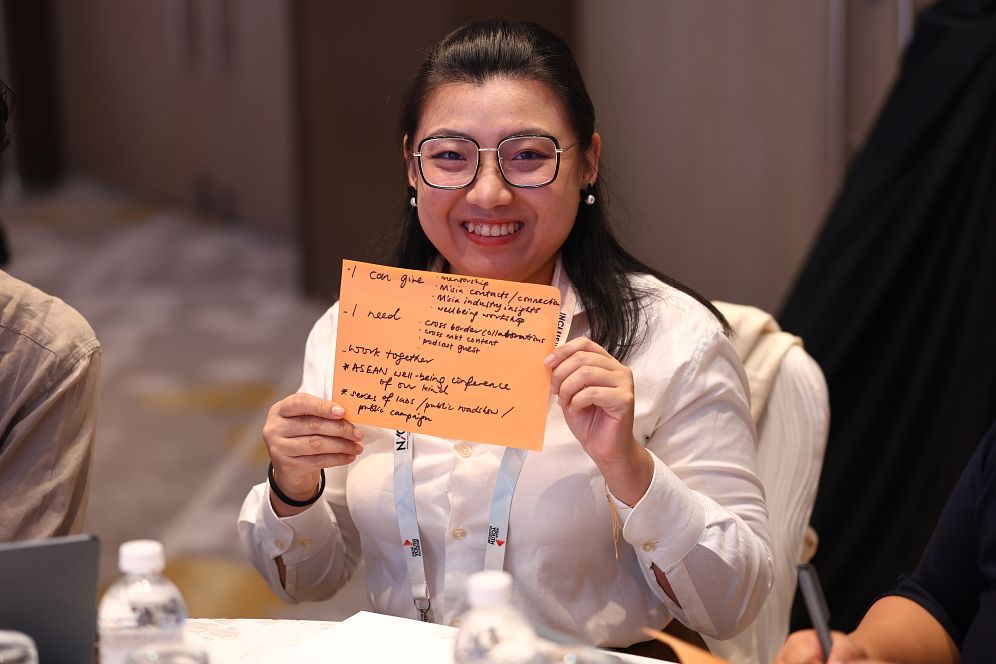
Neither Serene nor Su Yen described leadership as having the answers. Instead, both spoke about the power of listening.
“I got to hear the different perspectives of all the different Fellows,” Serene says, “to understand what truly benefits the people that we want to serve.”
Su Yen echoed this collaborative mindset, seeing the region as an interconnected community rather than a marketplace “I don’t see any competition among the ecosystem players,” she notes. “If we work together, the whole ecosystem can actually grow healthily forward.”
Carrying the work forward
When asked to imagine the future, Serene spoke about alignment.
“When I imagine a healthy ASEAN, I see a unified regulatory framework,” she explains; one that recognises how people move, work and live across borders.
Su Yen, meanwhile, returned to the human element. “I want people to start talking about their own wellbeing as a way to connect with one another,” she says.
Between these two perspectives sits a fuller picture of health; one that includes systems and policies but is anchored by daily habits, conversations and human connection. As young leaders, Serene and Su Yen did not just come with ideas. Through engaging with their peers, they discovered how those ideas could travel, adapt and serve others beyond home.
It is in that shift, from personal experience to regional contribution, that the value of programmes like AYF becomes clear. It is a space where learning deepens, perspectives widen, and purpose finds new direction. Even as systems evolve, health, at its core, requires people-to-people connection for positive change.
Applications are now open! If you are a young changemaker ready to scale your impact beyond borders, join a community of youth leaders shaping change across ASEAN. Register your interest here and follow our socials to stay informed.